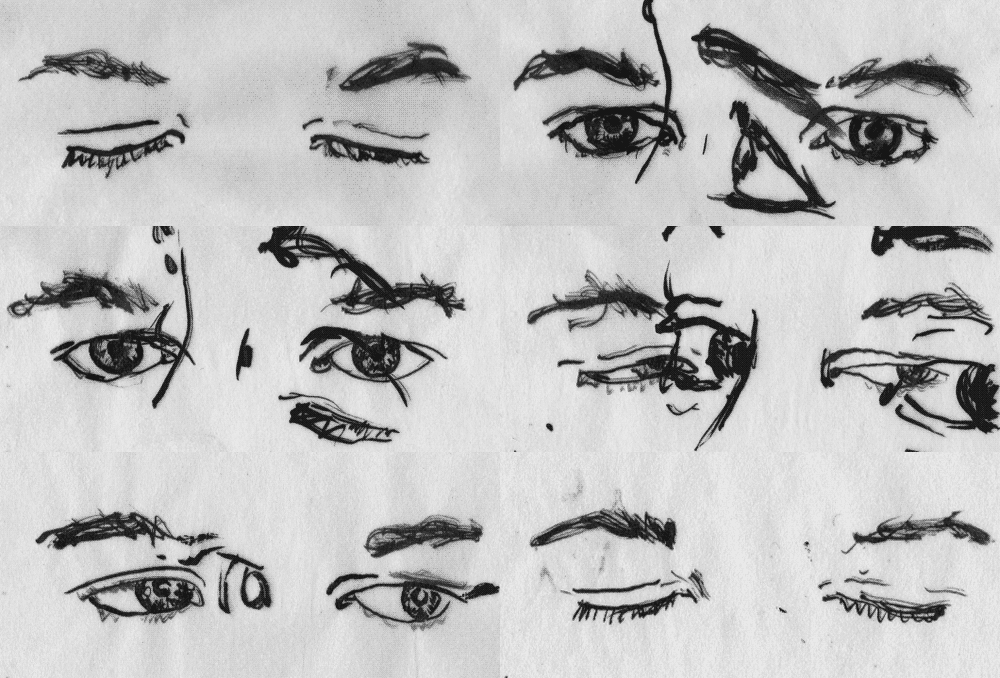
At first glance, Psychology, Art, Medicine, and Economics seem like distant relatives at best – forced to sit at the same table with nothing to say to each other. Psychology studies the mind, Medicine the body, Economics the system, and Art feels like it belongs everywhere and nowhere at once.
But what if the problem isn’t their differences? What if it’s the way we’ve learned to separate them? Because if you look closer – past textbooks or dull definitions – you start to notice something unsettling, something almost too obvious: They all revolve around the same thing.
You.
Your thoughts. Your fears. Your desires. Your decisions. Your body. Your value. Your expression.
Psychology tries to understand you. Medicine tries to heal you. Economics tries to measure and predict your behavior. And Art reveals you, often before you even understand yourself. This leaves us somewhere In-between.
Somewhere liminal.
Welcome to MindLiminal.
You’ve probably experienced it more than once – when something as small as a sound, a scent, or a certain taste suddenly feels familiar in a way you can’t immediately place.
It doesn’t return clearly. There’s no full memory, no exact moment you can point to, just a vague sense that it belongs somewhere in your past, tied to something or someone that once mattered without you realizing how much at the time.
Still, it stays with you. Not strongly enough to interrupt you, but enough to sit in the background of your thoughts, making you wonder why this specific detail – something you may have encountered countless times before – suddenly feels different now.
And sometimes, after thinking about it longer than you intended to, you find the connection.
It turns out to be something simple. A song that used to play in the background while your parents were arguing, something you barely paid attention to then but somehow absorbed anyway. Or a taste that brings you back to a night you can’t fully remember – just fragments of laughter, blurred conversations, the feeling of having had too much to drink and still, somehow, holding onto that one small detail.
Other times, you don’t get that far. The feeling never fully resolves, never turns into something you can name. You dismiss it, tell yourself it’s just your mind playing tricks, and move on without questioning it any further.
Even when you do find an explanation, you tend to reduce it. You call it coincidence, nostalgia, maybe even fate, and leave it at that.
But what tends to go unnoticed is how much happens before that point – the way something small is able to reach into your memory, pull something forward, and shape how you feel without asking for your attention.
That process isn’t rare or accidental. It happens constantly, quietly influencing how you respond to things, how you form attachments, and how you come to understand your own experiences. Most of it simply goes unexamined.
And once you begin to notice it, the question is no longer whether it’s happening – but how much of what you feel, want, and remember was ever entirely your own.

Leave a Reply